 Blog
Blog
Congestion Pricing Is The Least We Can(‘t) Do
As greater Los Angeles burns, undoubtedly from effects of climate change unraked leaves, on the other coast of the country, whiners, fake altruists, libertarians and people who have spent years driving throughout New York City are lamenting the worst tragedy in New York City since the towers fell: congestion pricing.
Originally an idea of then-Republican (or Independent) Mayor Mike Bloomberg, the policy that has been implemented charges a toll for cars travelling into Manhattan below 60th street. There are various exceptions, trucks and larger vehicles pay more and yellow cabs are charged a whopping 75 cents (and $1.50 for ride share cars I believe). The real or nominal goals behind congestion pricing are: to raise billions of dollars for MTA improvements, decrease traffic and improve air quality. No matter which of these you believe, these are all laudable goals and all true if we either reduce traffic and/or raise lots of money (apologies, I technically live in NJ now, but 39 years as a NYC resident, and a never-car owning, climate change-concerned citizen makes me feel some ownership of this policy).
So in Blue NYC of course people are behind this policy, right? Maybe, but the loudest voices seem to be the complainers, like the NY Post desperately seeking any angle to demonize the policy (“Funeral hearses will have to pass on the $9 to grieving families!” – yes because when being charged thousands of dollars by a funeral home, it is the $9 that will break the spirit of the grieving families).

This reminds me of when Mayor Bill de Blasio did not have the guts (admittedly it would have taken a lot of guts) to cap (not even ban) the number of ride share cars in NYC. Like so many libertarian tech “disrupters,” Uber came to the city with private investment money which allowed them to destroy the regulated taxi industry while they racked up debt paying drivers more than was sustainable with ride prices too cheap to sustain. But once they had decimated the value of Taxi medallions they began paying drivers a lot less (ads went from “guaranteed $5K a month to drive for Uber” to “$300 a week” to “get a side hustle you automotive slave!” marketing over the course of a year or two). But their work was done; Uber was a part of city life (more than once I’ve watched a young dummy standing in the rain for their Uber as empty yellow taxis drove by) and the app-obsessed, labor insensitive, Democrats of convenience that flood Manhattan would not hear of NYC restricting Uber! Arguments like “but Uber services communities that cabs won’t go to!” came from people who had never spoken of urban struggles before they needed an excuse to keep their Ubers. “There’s not enough taxis!” said the people who live in a city with the most impressive and cheap mass transit systems. “What about the jobs!” cried the people who actually deluded themselves into believing an early-era Uber $5 cab ride across Manhattan, which did not even require a tip, was some sort of labor Godsend! So de Blasio caved to the tech money and the loud whiners and fake heroes of NYC and allowed Uber and its ilk to flood the streets of Manhattan.
So now, with bus lanes (a great addition by Bloomberg that turned buses into an actual viable option to travel in Manhattan if you were on a schedule), bike lanes (ugh) and the addition of 100,000 ride share cars in New York City (which I assume includes beyond Manhattan) you have issues like awful travel times, and slower ambulance response times (why doesn’t anyone say “less traffic saves lives?!”?) something needed to be done to rectify the impact of the selfishness that brought this upon Manhattan. Enter congestion pricing.
The re-election of Donald Trump basically meant that egg prices were more important to voters than democracy, decency, actual data, and a whole host of other substantive things. And I believe the anger about congestion pricing is another example of what I referred to earlier as “Democrats of convenience.” Climate change? Who cares, I want to drive my car. Slower emergency response time? So what, I want to travel in an Uber. Raising funds to improve the MTA which shuttles millions of people to help make NYC work? I. DON’T. CARE.
So we are at a fork in the road in American and human history and with Trump and congestion pricing animosity I think it is clear we will take the path more traveled and that will make all the difference. We have chosen and will choose selfishness. If a Blue place like NYC cannot wholeheartedly embrace this as a collective challenge to be overcome together, for a relatively small amount of money, is there any inconvenience we won’t cave to? Let alone face down major challenges? The WWII/JFK spirit of past generations is gone. We take inconvenience (let’s not even get to actual sacrifice) as an affront to our American entitlement. We use “poor and middle class” people as swords to be wielded against policies that make more affluent or selfish people mildly inconvenienced. We have never built in the costs of carbon into our society. From hamburgers to driving your own SUV around, we allow people to live without truly paying for what they impose on society and then act offended and angry when a fraction of that cost is demanded (if gas were $12/gallon and hamburgers were $35 each that would be appropriate and would also cause riots and careers to end). Congestion pricing is almost a concession – yes we know you are selfish and want to engage less with the community in public transit. Fine – but for the impact that causes on society (below 60th street in Manhattan), you may no longer do it for free. BOOOOOOOOOOOOOOOOO.
So in a society and world that needs dramatic change, we cannot even join together for modest and needed changes. he truth is – the American Dream that allows people to live in houses a 90 minute drive from work is bordering on an environmental crime at this point. Of course, cost of housing in cities is the fault of a certain class of people and government, but not everyone who chooses to live far away from work or public transit is always doing so as a result of housing cost. Sometimes it is the fact that your energy usage are personal choices made easier because the true cost and responsibility are not passed on to you. And for everyone who says things like “but the Subway is so dangerous.” Yes – the solution for that is more cops getting on trains, not groups of cops texting on their phones in subway stations. The world of “treat me like a hero as my union allows me to avoid some of the scenarios that would require a hero” culture of the NYPD needs to end. But the truth is, if even Blue society will put egg prices above democracy and selfish convenience over the environment and improving their own communities then perhaps we should all give up on America and the future. But don’t tell me it’s because you care about anything besides yourself. Because those working class people you are “concerned” about? Most of them are on the bus and subway while you sit in an Uber or your car fu*king things up.
 There are many phrases in the American lexicon that suggest an admiration for people who overcome struggle and adversity. Only The Strong Survive! Whatever Doesn’t Kill You Makes You Stronger! Pain Is Weakness Leaving The Body! But in the wake of this election season and the various autopsies to determine how and why America re-elected Donald Trump, one that has been stuck in my head has been Pressure Builds Diamonds. I don’t know where I first heard this, but it sounds like something, despite being technically true, that one would find on a cheesy motivational poster in the cubicle of an energy drink salesman. But I wanted to reflect on how this country has and is treating those under immense pressure and how it regards those who do rise from it as figurative diamonds.
 This week I hit the road again for a Thursday gig in Pittsburgh (at this point, based on my three shows in Pittsburgh since 2021, my next audience may actually contain a negative number of people) and a Friday/Saturday in Chicago, with the Friday show being a live Making Podcasts Great Again and Saturday being a headlining stand-up set. Following our great live show in NYC for MPGA and wanting to keep working out my new hour, this was a week I was looking forward to for a while. Unfortunately, I have not been this disappointed in Pittsburgh since I heard racial slurs yelled at a Steeler game in 2009. However, I have not been this happy with Chicago since Karl Malone won game 5 of the 1998 Finals with 39 & 19 to send the series back to Utah (in Game 6 Michael Jordan shoved Bryon Russell). So let’s get into it, as I sit in a downtown Chicago Starbucks waiting for my 6:40pm train back east.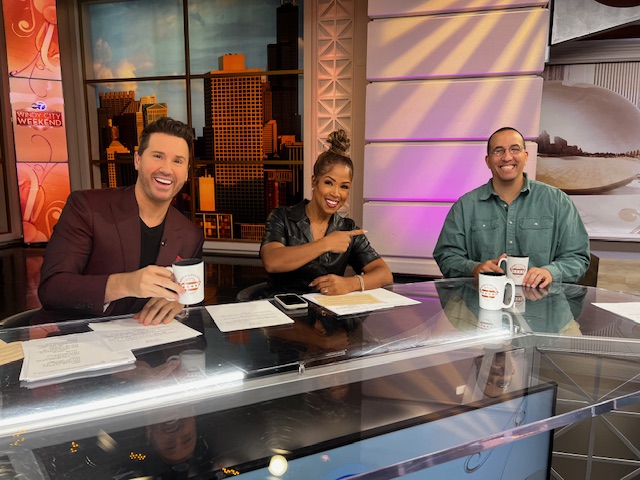
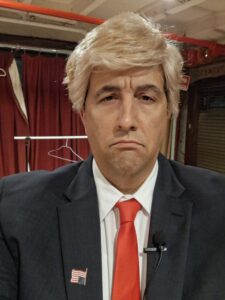 Last night I had a live recording of Making Podcasts Great Again in Rutherford, New Jersey. Making Podcasts Great Again is the show I have done for 6 1/2 years every week without missing a week as Donald Trump. In 2020 we saw exponential growth commensurate with the exponential exposure I got for my viral videos of Trump and other political figures. Over the last couple of years I reluctantly continued the show as Trump maintained his stranglehold on American politics and culture, but I decided 2024 would be the last year of the show. As part of the farewell me and my show co-host, Jay Nog, scheduled a few live shows around the country. This is the recap of the New Jersey show.
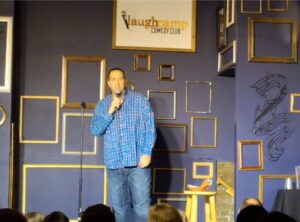 This weekend I returned to St Paul, MN for some shows after a 6 year absence. The last time I was in St Paul at the same location it was the final resting place of the Joke Joint, a wonderful, welcoming club that gave comedians like me a chance at headlining. Then the pandemic hit and since 2022 I have been trying to get booked at the club. Thanks to a persistent fan, three very big headliners who wrote me recommendation emails (there is a formal process to be considered by the booking agent), and more persistence by my fan it only took me 20 months to appear at Laugh Camp in St Paul. I have said many things about comedy, but one of the truest is that it is better to be a bad comedian with an agent than a great comedian with no agent. But was the effort worth it? Absolutely – let’s get into the recap.

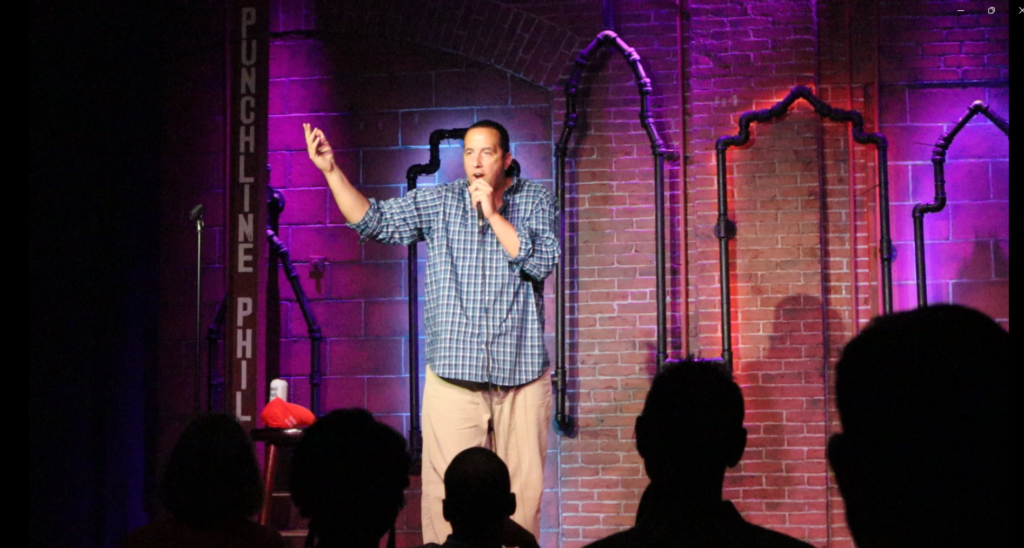
 When I began doing stand-up in 2003 I had no idea whether I would be good, whether I would enjoy it and how long I would do it. It has now been 21 years since my first open mic and I am proud of what I have produced and how good I have become. However, I am somewhat regretful of having spent so much of my adult life working, striving and stressing over an art form that has changed so much over that time that I’m not sure it’s an art anymore. I actually believe getting into comedy when I did was the worst possible time – just enough exposure to how comedy used to be to somewhat resist the marketplace of content mercenaries it has become.
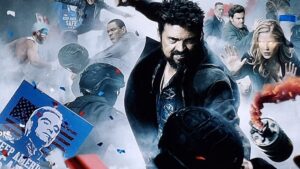 I have been a huge fan of The Boys on Amazon Prime since season 1. I was completely unfamiliar with it when I first checked it out in 2019 and have loved the first three seasons. The acting, especially from Antony Starr (who I’ve been saying deserves an Emmy nomination since season 1 and telling my friends to watch Banshee), is great. The violence is startling, but often with the intention to startle or produce dark laughter. The show’s sex and nudity are often the same. And the tone, just beneath the surface of the show, has been that of a healthy skepticism of heroes, patriotism and other virtues that are often only skin deep. And then season 4 happened.
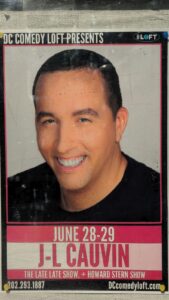
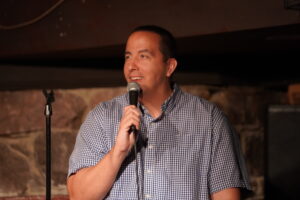 This weekend, 21 years after the first month I went to my first open mic in Washington, DC to begin one of the most frustrating experiences of my life, I returned to the nation’s capital for four shows at the DC Comedy Loft (ironically enough across the street from one of the first places I ever performed at). There was classy Amtrak travel, podcasting that aged horribly 8 hours later when President Biden took the debate stage, 4 great shows in front of 3 great crowds and an 11 person meeting, 2 meals at the Cheesecake Factory, a reunion from my days as a prosecutor in the Bronx and a tremendous amount of sweat. So let’s get into this epic!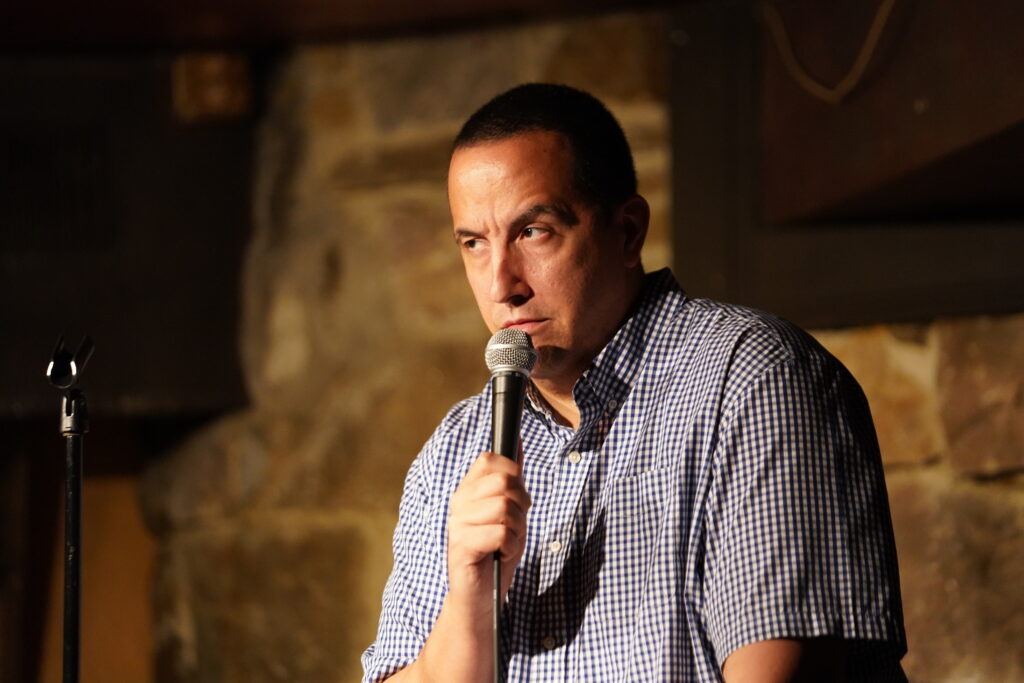

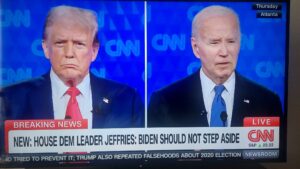
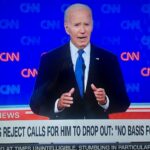 Last night was a night that may prove more consequential for the role of TV and politics in America than the 1960 Kennedy-Nixon debate. That debate, the first televised, is widely considered a watershed moment in this country when visuals became an integral component of how we pick leaders. And for 64 years that was the standard used to show the importance of television. I believe if Donald Trump wins re-election as a man who has been twice impeached, convicted of 34 felonies and never won a popular vote, this debate should replace the Kennedy-Nixon debate as the new standard for how a television debate can go wrong.