 Blog
Blog
Was Shooter McGavin Right?
This morning, with my morning coffee, I finished a re-watch of Happy Gilmore, Adam Sandler’s classic sports comedy (and my favorite movie of his). As compelled by my algorithm-content addled brain, I “needed” to do a re-watch of a movie I have seen five times, because Netflix is releasing Happy Gilmore 2 tomorrow. I have my doubts as to whether, for many reasons, the sequel will be any good, but the original has more than earned a chance for the sequel. But at the risk of jumping on the Cobra Kai-style trend of revisiting the bad guy years later, watching Shooter McGavin, played iconically (yes I mean that – not in the overused parlance of our times) by Christopher McDonald, I couldn’t help but think, “he sure would hate where we are today. And he wouldn’t be wrong.”
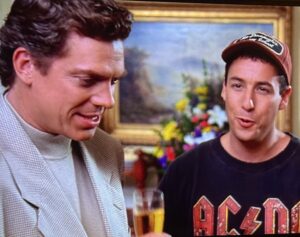
Before I continue, full disclosure, I have a complicated relationship with Happy Gilmore because 20s and 30s me looked very similar to Sandler’s Happy Gilmore (with a lot more height, muscle and entertainment business failure). But spiritually, as unflattering as this may sound, I am closer to McGavin. Happy has my temper and my face, but McGavin has my righteous, traditional soul.
In the 1980s and 90s there was this trend that I did not notice until I was a fully formed adult, that villains in comedies were often annoying bureaucrats that in the real world were actually on the right side. Think Walter Peck in Ghostbusters – a mean EPA official with the buzzkill audacity to be concerned about… a ghost-catching, unregulated, nuclear reactor in the middle of Manhattan) or McGavin, a man who respects and honors the traditions of his sport, albeit too passionately and condescendingly. Interestingly enough, Happy Gilmore came out a year before Tiger Woods won his first major and upended the traditions of his sport with his fist pumps and more importantly, his race. But what Gilmore does is more akin to the first influencer golfer. Even when he is losing, he is a big star. More Anna Kournakova (who no one had a problem trashing and pointing out it was her beauty, not her talent that people cared for) than Tiger Woods (who as a Trump supporting adulterer probably made all the stuffy “traditionalists” feel more comfortable that some traditions were still safe in Woods’ hands).
So of course McGavin exhibits enough negative traits to merit being the villain of the film (hiring a heckler, hiring that heckler to hit Happy with a car, stealing his jacket after Happy wins), but his main complaints throughout the film concern the trashy people, vulgar antics and general disrespect for tradition that Happy and his fans represent. Similar to how I complain about crocs and cell phones going off at Broadway shows, in the 29 years since Happy Gilmore, clearly a full rejection of all that McGavin represents appears to be a bad thing.
My guess is that the new film will adopt a middle ground on Shooter and give him some arc of redemption while still poking fun at him. The same way I feel like a sequel to The Cable Guy is warranted, not just to honor an unfairly maligned classic, but because Chip Douglas’ late recognition of TV as the problem would make him a great hero 30 years later where the Internet and smart phones have created far worse villains. But the question I have for Happy Gilmore 2 is, which would be better, sticking to the old ways with their problems or opening the floodgates like Happy did? And is there a middle ground available in the films or in real life?